
Traceability as trust architecture.
Supply Chain Intelligence reframes supply chain visibility as a governance function — not a reporting exercise. One verified identity per entity, evidence behind every claim, a graph that mirrors reality.
From tracking to trust.
Why a decade of dashboards and certificates is no longer enough.
The first generation of traceability tracked material from one point to another. The second verified that sustainability claims were backed by consistent data.
Under EUDR, CSRD and CSDDD, traceability has become something else entirely: an architecture of trust — a system that lets regulators, buyers and stakeholders rely on a company's claims without falling back on assumption or goodwill.
Five foundations the engine is built on.
Design choices that decide whether traceability holds up under audit — or collapses under it.
Single Source of Truth
Administrative, spatial, transactional, logistical and compliance data consolidated into one unified frame. Every entity holds a single verified identity.
Evidence-Based Traceability
Every claim is backed by auditable evidence — transactions, spatial trails, movement records, logistics. The system stores the full audit trail, not just the conclusion.
Multi-Level Verification
Verification runs in layers: administrative, spatial, temporal, logistical and ownership — so modelled supply relationships reflect reality on the ground.
Graph-Based Intelligence
Supply chains are represented as graphs of nodes and edges, not flat transaction tables — exposing indirect routes, consolidation points and systemic risk.
Regulation-Ready by Design
Built from the start to satisfy EUDR, CSRD/ESRS and CSDDD: precise geolocation, risk-based due diligence and structured reporting.
A platform that makes due diligence reproducible — not narrative.
An integrated intelligence stack, not a collection of dashboards.
Each component is a domain database in its own right — and a node in the wider graph.
Verified Mill Database
Foundation of Traceability-to-Mill (TTM): unique identity, verified coordinates, ownership and group structure, capacity profile, supply-shed estimate, compliance history.
Facility Database
Refineries, KCPs, bulking stations, manufacturers, ports and POD — every midstream and downstream facility positioned as a node in the supply chain graph.
POD Intelligence
Palm Oil Dealers treated as intelligence entities: verified identity, mapped supplier and mill links, volume and route patterns, behavioural risk score.
Concession & Spatial Intelligence
Plot boundaries, planted and non-planted areas, historical land cover, peat, HCV/HCS and protected areas, permits and certifications — the spatial backbone for VDF and EUDR.
Liability & Compliance Intelligence
Dynamic NDPE history, audit findings, social and legal exposure, beneficial ownership and group linkages — connected directly to the supply chain graph.
The operational backbone.
Where core components build identity, the Connector Database links every entity into a coherent, dynamic, audit-ready supply chain. The focus is not integration — it is the explicit, evidence-based reconstruction of supply relationships.
POs, DNs, logistics documents, PDFs, GPS and mobile tracking, POD and informal transactions — extracted, parsed, and tagged with temporal context.
Attribute standardisation, multi-alias deduplication, spatial matching, ownership analysis, cross-checks against certification and logistics data.
Verified identities and validated relationships assembled into a graph that mirrors actual material flow — direct and indirect.
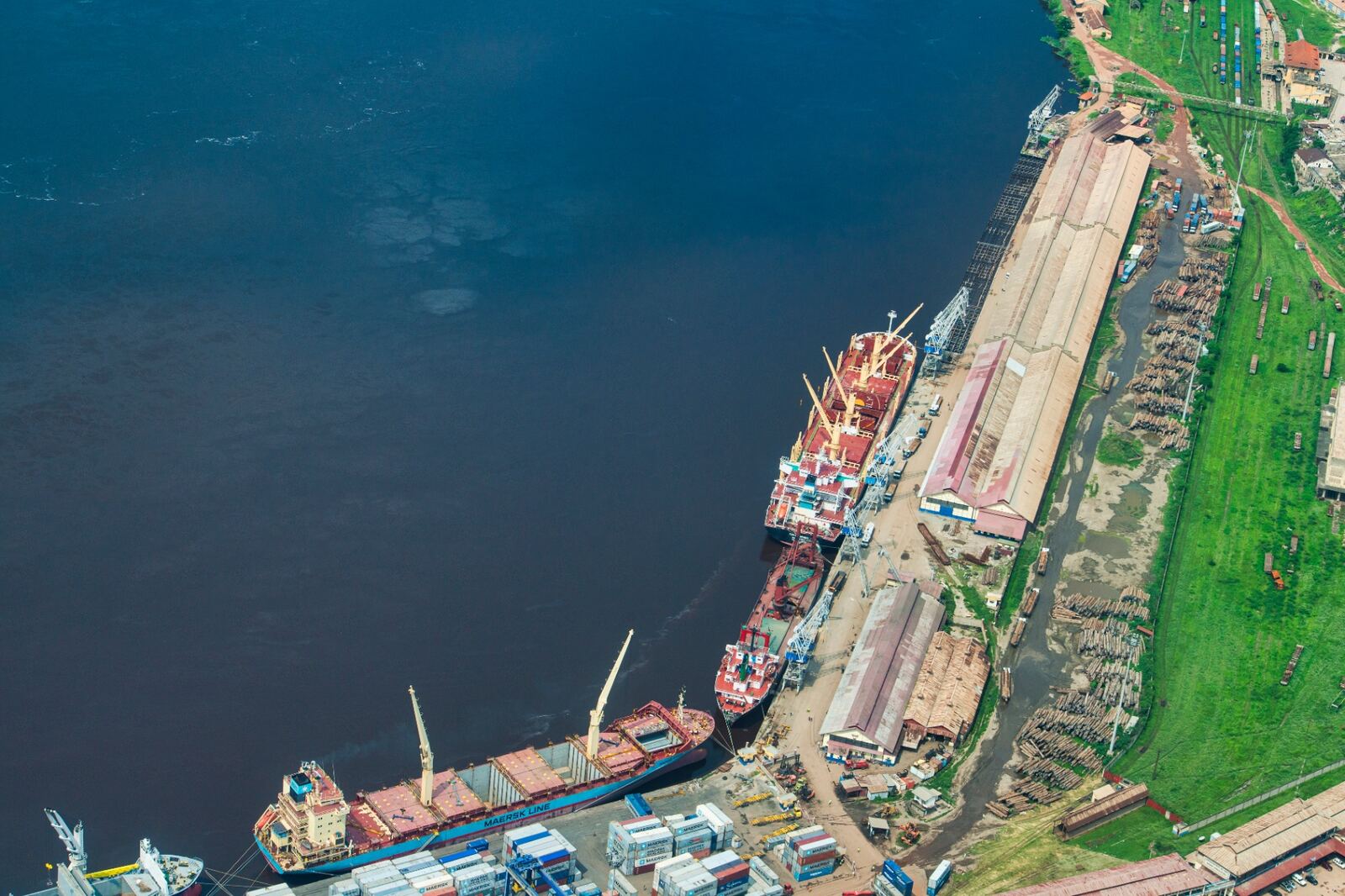
Where material moves, evidence follows.
Ports, dispatch yards and consolidation points are where supply chains either prove themselves — or fall apart. Supply Chain Intelligence ingests vessel manifests, dispatch notes, GPS tracks and POD movement to reconstruct the physical flow that paperwork alone can never confirm.
Four complementary data approaches.
No single source reaches every plot — so we triangulate from audits, fields, dealers and movement data.
Audit Report–based TTP
RSPO, MSPO and ISPO assessments mined for verified plot, supplier and mill data.
Field Survey
Direct ground collection where audit data is incomplete or absent.
POD Survey
Destination mills, sales volumes, consolidation patterns and upstream relationships from dealers.
IoT & Shipment Tracking
Movement evidence that closes blind spots when formal documentation is missing.
Four integrities that make claims defensible.
Identity, relationship, evidence and process — each one independently verifiable.
Integrity of Identity
Master supplier IDs and entity resolution ensure each supplier, facility and entity has one accountable identity — even across aliases and systems.
Integrity of Relationship
Supply links are reconstructed from evidence — transactions, logistics, spatial proximity — not declarations alone.
Integrity of Evidence
Every figure, map and indicator is traceable to its underlying source and methodology, ready for audit and external scrutiny.
Integrity of Process
Mitigation, monitoring and reporting consistency across periods — accountable processes, not just descriptive output.

Aligned with the regulations reshaping global supply chains.
Built to the standards your buyers, regulators and auditors are already enforcing.
Plot-level geolocation, deforestation-free verification and risk-based due diligence statements.
Structured sustainability disclosure with consistent, auditable supply chain data.
Documented due diligence on adverse impacts across the full upstream value chain.
Continuous screening of mills and indirect supply for No Deforestation, No Peat, No Exploitation breaches.
From visualisation to accountability.
Every figure, map and risk indicator can be traced back, explained and verified — building confidence for management, auditors and international market partners.